
PoleFX Engineering Journal / series
Inside One Frame
Profiling PoleFX from the Raspberry Pi render loop to the ESP32 and the wire, one explicitly bounded instrument at a time.
In this series, in order
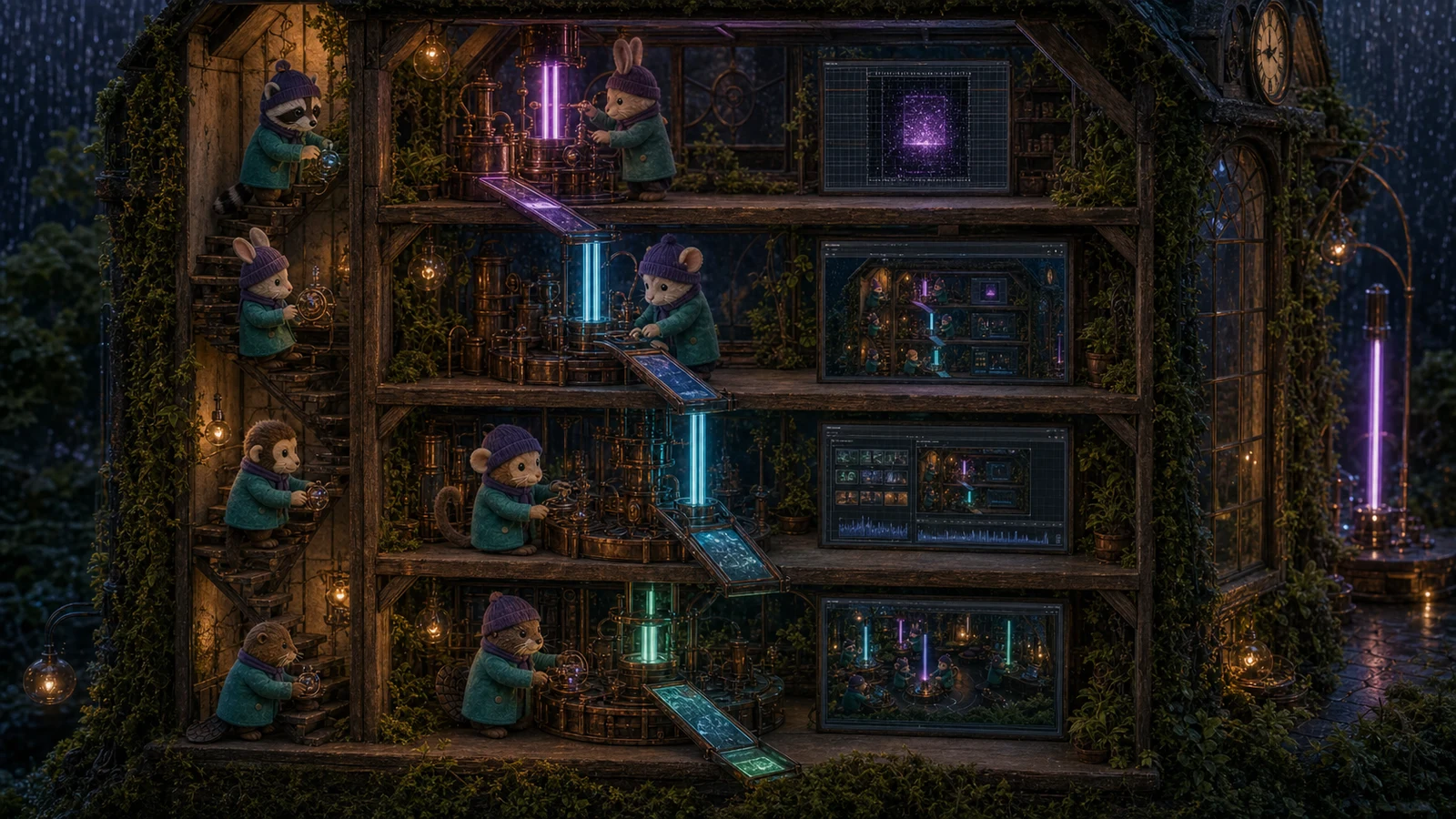
Inside One Frame, Part A: The Raspberry Pi
At 60 frames per second, the controller gets 16.7 milliseconds to turn an effect into packets for every pole. We built a flight recorder that reconstructs the PoleFX-owned work inside a frame, used it to separate rendering, composition, preview, and output time, then redesigned the capture path when the observer started disturbing the system it measured.
Read the field note →
60 FPS Wasn’t the Whole Truth: Qualifying the Pi’s Output Envelope
The Raspberry Pi kept rendering on time even after an external receiver started seeing gaps. Closing the profiler’s last qualification gate meant learning that “60 fps” and “complete output” are two different promises—and defining a narrower product envelope than the timing graphs alone suggested.
Read the field note →